
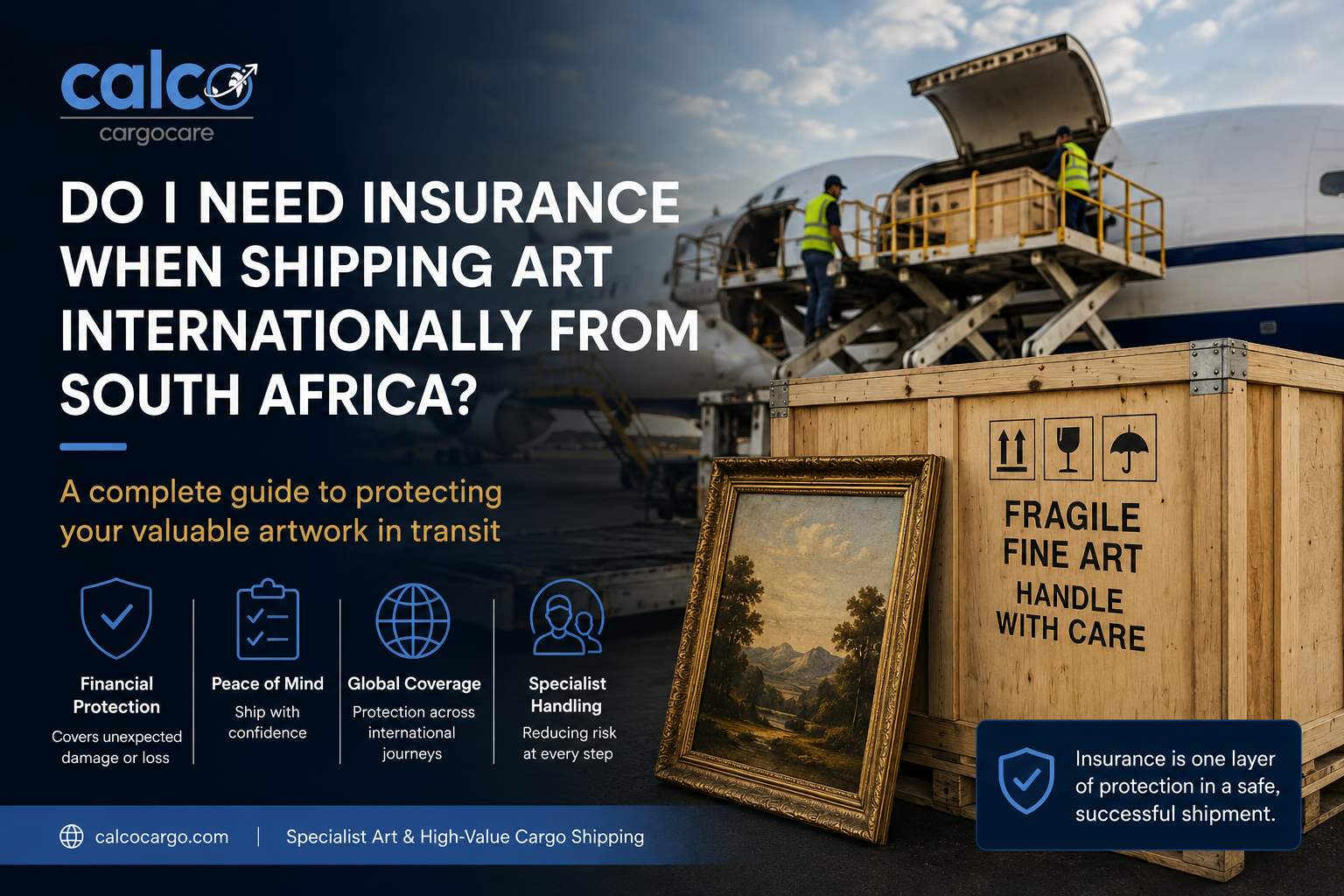
Shipping artwork internationally is very different from shipping standard cargo. Paintings, sculptures, antiques, collectables, and other high-value items are not only financially valuable — they are often irreplaceable. Whether the shipment is destined for a gallery, private collector, exhibition, or overseas buyer, one question eventually comes up:
Do I need insurance when shipping art internationally?
The short answer is yes — in most cases, insurance is strongly recommended when shipping valuable artwork internationally from South Africa.
But the real answer is more nuanced than simply “get insurance.” Understanding how insurance works, what it covers, and how shipping methods, packing standards, and handling procedures affect risk is essential when transporting valuable items across borders.
Quick Answer: Should You Insure Artwork During International Shipping?
Yes — in most cases, insurance is strongly recommended when shipping valuable artwork internationally from South Africa. While professional packing and specialist handling significantly reduce risk, insurance provides financial protection against unexpected events such as handling damage, customs complications, environmental exposure, or transit delays.
Why Insurance Matters When Shipping Art Internationally
Artwork and high-value cargo move through multiple stages during an international shipment. Depending on the destination and transport method, an item may be:
- collected locally
- packed or crated
- transported to a cargo facility
- loaded onto aircraft or shipping containers
- processed through customs
- transferred between handling agents
- delivered to the final destination
Even with careful planning, international logistics introduces risks that do not exist in standard local transport.
Unlike mass-produced consumer goods, fine art and collectables often have:
- unique financial value
- emotional or historical significance
- fragile materials
- sensitivity to environmental conditions
- specialised handling requirements
Insurance helps protect the financial value of the shipment if unexpected issues occur during transit.
What Can Go Wrong During International Art Shipping?
Most international art shipments arrive safely when handled correctly, but there are still risks that clients should understand before transporting valuable items overseas.
Handling Damage
Artwork can be vulnerable to:
- vibration
- impact damage
- pressure during stacking
- accidental drops
- improper lifting
This is especially true for:
- framed artwork with glass
- sculptures
- mixed-media pieces
- antiques
- fragile collectables
Improper handling during loading, customs inspections, or transfers between facilities can result in costly damage if packaging is inadequate.
Environmental Exposure
International cargo may be exposed to:
- humidity
- moisture
- temperature fluctuations
- dust
- prolonged storage conditions
Certain artwork materials are particularly sensitive to environmental change, including:
- canvas paintings
- wood
- paper-based artwork
- older antiques
- photographic prints
Professional packing and climate-aware crating help minimise these risks significantly.
Customs Inspections & Delays
International shipments are sometimes selected for customs inspection. If documentation is incomplete or inaccurate, delays can occur.
In some cases:
- crates may be opened
- items may be manually inspected
- shipments may be held temporarily
Incorrect declarations or poor documentation can increase the likelihood of unnecessary handling or clearance complications.
Transit Delays
Delays can happen due to:
- weather disruptions
- airline scheduling changes
- port congestion
- customs processing
- routing adjustments
While delays do not automatically result in damage, extended transit times can increase exposure to environmental and handling risks.
The key takeaway is that insurance works best when combined with specialist handling and professional packing.
Is Shipping Insurance Legally Required?
In many cases, shipping insurance is not legally mandatory for international art shipments. However, that does not mean it should be overlooked.
Most galleries, collectors, institutions, and experienced exporters strongly recommend insuring valuable shipments — particularly when:
- the item is difficult or impossible to replace
- the declared value is high
- the shipment is travelling internationally
- multiple handling stages are involved
Many first-time shippers assume standard freight liability provides sufficient protection. In reality, standard carrier liability is often limited and may not reflect the true value of the artwork being transported.
How Art Shipping Insurance Typically Works
Shipping insurance generally considers several factors when determining coverage and risk.
Declared Value
The declared value of the shipment is one of the most important elements. This value should accurately reflect:
- the selling price
- replacement value
- insured valuation
- invoice amount (where applicable)
Under-declaring value may reduce insurance costs initially, but it can create serious issues if a claim becomes necessary.
Packing Standards
Insurance providers often expect artwork and high-value items to be packed professionally and appropriately for international transport.
Poor packing may:
- increase the likelihood of damage
- weaken claim validity
- expose the shipment to avoidable risks
Professional crating and specialist packing are not simply protective measures — they also demonstrate that reasonable precautions were taken before shipment.
Transport Method
The chosen freight method can influence both risk and insurance considerations.
Air Freight
Air freight is often preferred for valuable artwork because:
- transit times are shorter
- handling stages are reduced
- cargo environments are more controlled
Sea Freight
Sea freight may be appropriate for:
- large installations
- fully crated shipments
- lower urgency consignments
However, sea freight introduces:
- longer transit periods
- increased environmental exposure
- additional handling stages
The most suitable option depends on:
- shipment value
- fragility
- timing requirements
- destination
If you are deciding between transport methods, our guide to International art & high-value cargo shipping from South Africa explains how specialist freight decisions are made for sensitive cargo.
Common Insurance Mistakes When Shipping Art
Many shipping problems are not caused by transport itself, but by avoidable preparation mistakes.
Assuming Courier Liability Is Enough
Standard courier liability often covers only limited amounts and may not fully compensate for valuable or irreplaceable artwork.
Clients sometimes discover this too late.
Under-Declaring Shipment Value
Attempting to reduce costs by declaring a lower value can significantly affect claim outcomes if damage or loss occurs.
Declared values should always reflect the true value of the shipment.
Using Inadequate Packing
One of the most common causes of shipping damage is poor packing.
Examples include:
- insufficient internal protection
- weak outer packaging
- incorrect crate sizing
- lack of shock absorption
- unsecured framed artwork
Proper packing reduces both physical risk and insurance complications.
Choosing the Wrong Freight Method
Selecting freight based only on price can increase handling exposure and transit risk.
A specialist assessment helps balance:
- safety
- transit time
- routing
- shipment value
- environmental considerations
In many cases, preventing damage is more important than relying on insurance claims afterwards.
Why Specialist Handling Matters More Than Insurance Alone
Insurance is important, but preventing problems before they occur is even more important.
Specialist art shipping focuses on:
- reducing handling stages
- using appropriate packing methods
- selecting suitable freight routes
- managing customs documentation correctly
- identifying risks before shipment begins
This proactive approach significantly reduces the likelihood of damage or claims.
For this reason, experienced galleries, collectors, and exporters often prioritise specialist handling and packing standards as much as the insurance policy itself.
Professional Packing & Crating Reduces Risk
Professional packing is one of the most effective ways to protect artwork during international transport.
Depending on the shipment, this may include:
- museum-grade packing
- custom wooden crating
- climate-aware materials
- reinforced framing protection
- shock-absorbent internal supports
Our guide on How to Pack and Crate Artwork for International Shipping explains the role proper packing plays in protecting valuable consignments during overseas transport.
Planning Ahead Is Essential
International art shipping should never be treated as a last-minute process.
Proper planning allows time for:
- valuation discussions
- insurance arrangements
- professional packing
- export documentation
- freight coordination
- customs preparation
Early planning also reduces the likelihood of rushed decisions that increase risk unnecessarily.
Final Thoughts
Insurance plays an important role when shipping art internationally from South Africa, particularly for valuable, fragile, or irreplaceable items. However, insurance should be viewed as part of a broader risk-management strategy — not the only layer of protection.
The safest international art shipments combine:
- specialist handling
- professional packing
- appropriate freight selection
- accurate documentation
- careful planning
- suitable insurance coverage
By understanding the risks involved and working with experienced specialists, collectors, galleries, artists, and private clients can significantly reduce the likelihood of problems during international transit.
If you are planning to transport artwork or high-value cargo internationally, Calco Cargo provides specialist guidance, freight coordination, and handling solutions tailored to sensitive shipments from South Africa.